
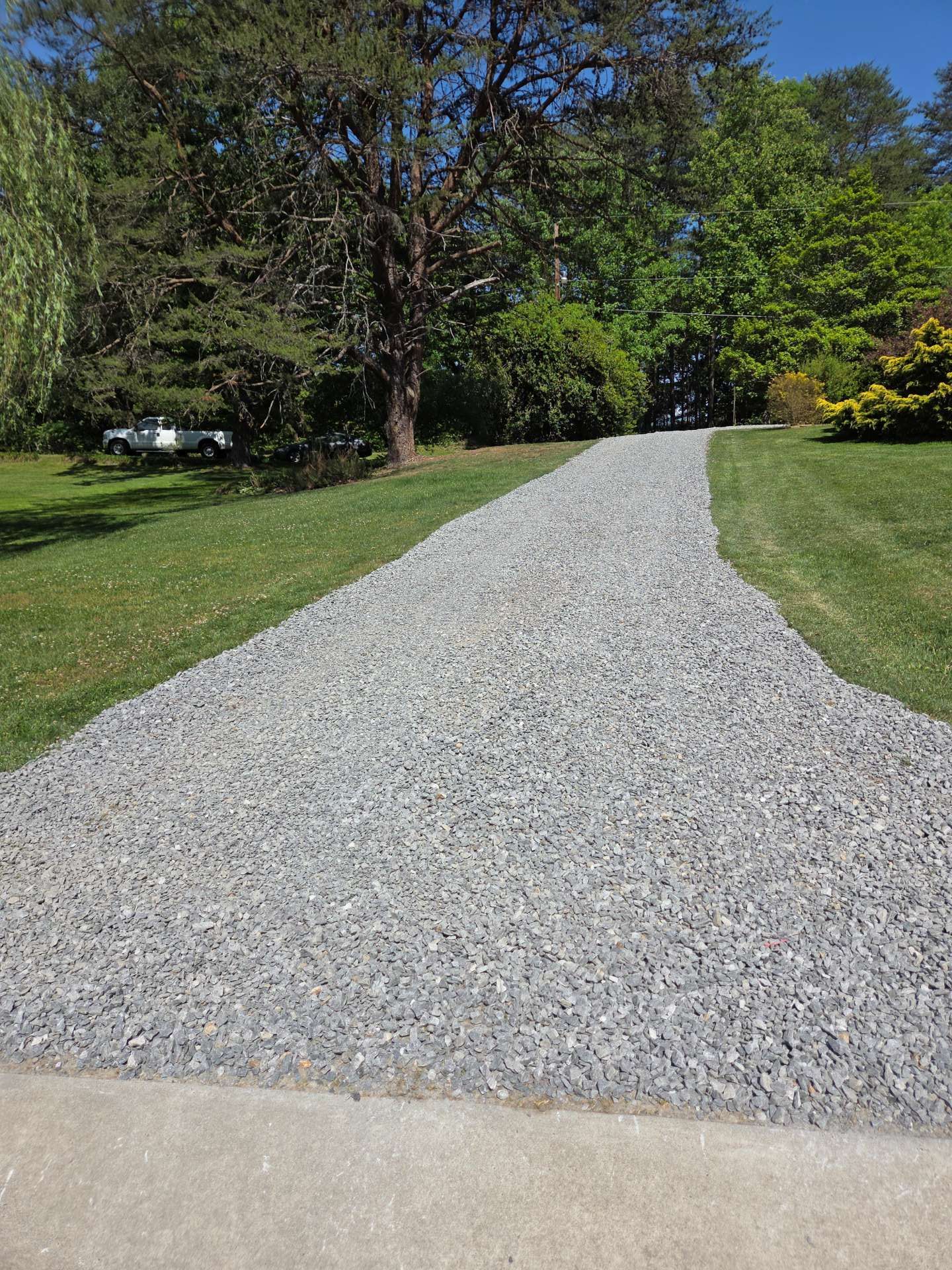
Driveways Built to Handle Weather and Traffic
Gravel Driveways in Boonville for properties needing new installation, surface restoration, or improved drainage and grading
Gravel driveways offer durability and functionality when properly graded and surfaced, but poor installation leads to ruts, washouts, and uneven surfaces that worsen with every rain. Proper grading supports water drainage and prevents material migration, ensuring the driveway remains level and accessible through regular use and seasonal weather. R&H Landscaping and Grading installs and repairs gravel driveways in Boonville using professional equipment to shape, level, and compact surfaces designed to withstand vehicle traffic and weather conditions common to the region.
Installation involves preparing the base, grading for proper slope and drainage, selecting gravel sized appropriately for the driveway's use, and compacting layers to create a stable surface. Repair work addresses existing driveways with ruts, low spots, or drainage issues by regrading and adding material where needed.
Request a free estimate to evaluate your property's access needs and determine the grading and material requirements for a functional driveway.
What Proper Grading Requires
Gravel driveway performance depends on correct grading and base preparation before surfacing material is applied. The base must be compacted and sloped to direct water off the surface rather than allowing it to pool and soften the foundation. Gravel size affects how well the surface resists displacement under vehicle weight, with larger crushed stone providing stability and smaller material filling gaps to create a smoother driving surface.
R&H Landscaping and Grading uses equipment designed for accurate shaping and leveling, ensuring proper crown and slope along the driveway's length. Once completed, the surface drains water effectively, remains firm under regular traffic, and resists the rutting and washout that occur when driveways lack proper grading or compaction.
The service includes grading, material delivery, and installation for new driveways, or regrading and resurfacing for existing drives showing wear. It does not include paving, asphalt work, or decorative edging, though those elements can be coordinated separately if desired.
What Homeowners Usually Ask
Driveway projects involve decisions about materials, grading, and long-term maintenance that affect performance and appearance.
What gravel type works best for driveways?
Crushed stone with angular edges compacts tightly and resists shifting, while rounded river rock tends to migrate under vehicle weight and does not provide the same stability for high-traffic surfaces.
How is proper drainage achieved during installation?
The driveway is graded with a slight crown in the center and slopes toward edges, allowing water to run off into surrounding areas rather than pooling on the surface or eroding the base.
Why do some gravel driveways develop ruts and low spots?
Inadequate base preparation, insufficient compaction, or improper grading allows gravel to shift under vehicle weight and water to erode material, creating uneven surfaces that worsen over time.
When should an existing driveway be regraded?
If water pools after rain, ruts form where vehicles travel, or the surface has become uneven and difficult to navigate, regrading and adding fresh material restores functionality and drainage.
How does North Carolina clay soil affect driveway installation?
Clay retains moisture and softens when saturated, making proper base compaction and drainage grading critical to prevent the driveway from developing soft spots or rutting during wet periods.
R&H Landscaping and Grading provides installation and restoration of gravel driveways designed for long-term performance and weather resistance. Schedule a consultation to discuss your property's access needs and receive a detailed estimate based on driveway length, grading requirements, and material selection.